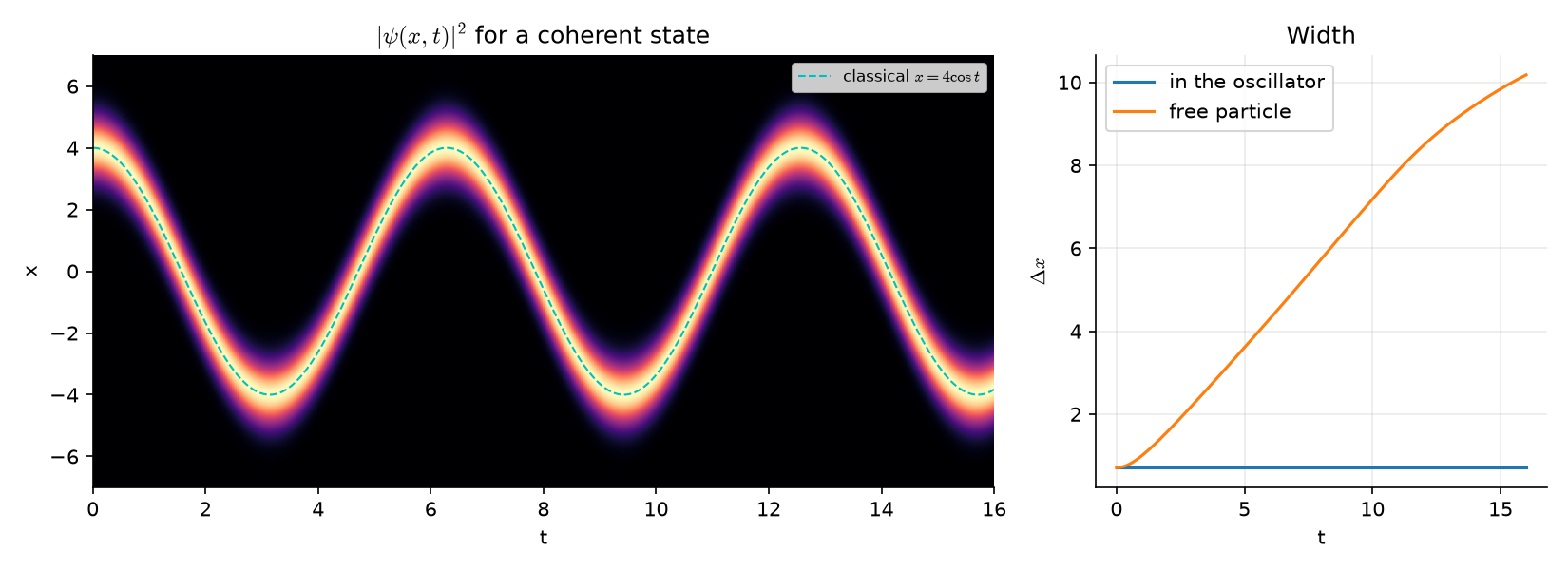
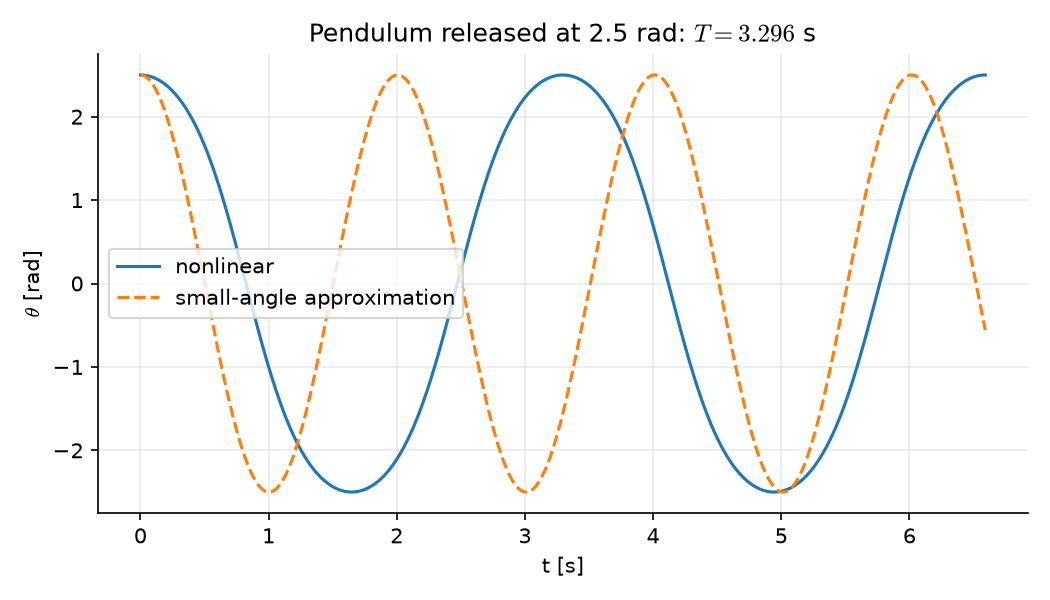
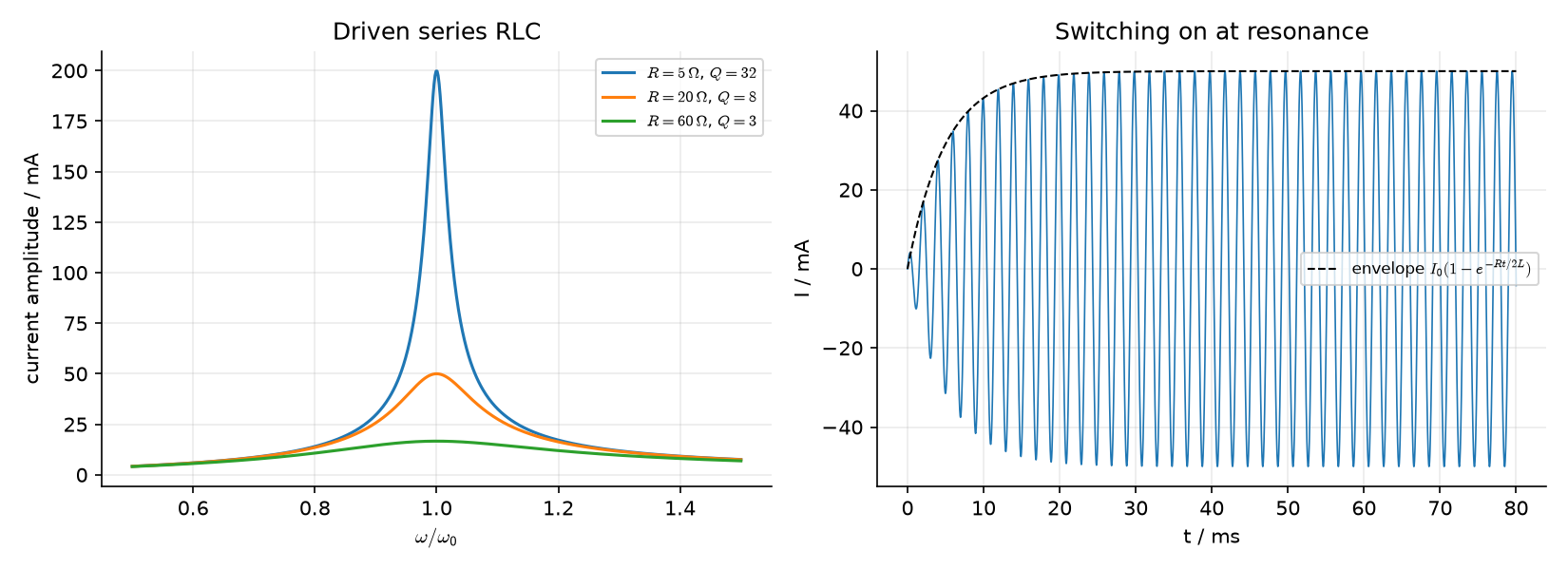
- 01Simple harmonic motion
For: A-level Physics (for example AQA 3.6.1.2 to 3.6.1.4, OCR A 5.3, Edexcel Topic 13) and IB Physics (C.1, with resonance from C.4). Check your own specification for the exact wording.
A starting pointRun it in Colab
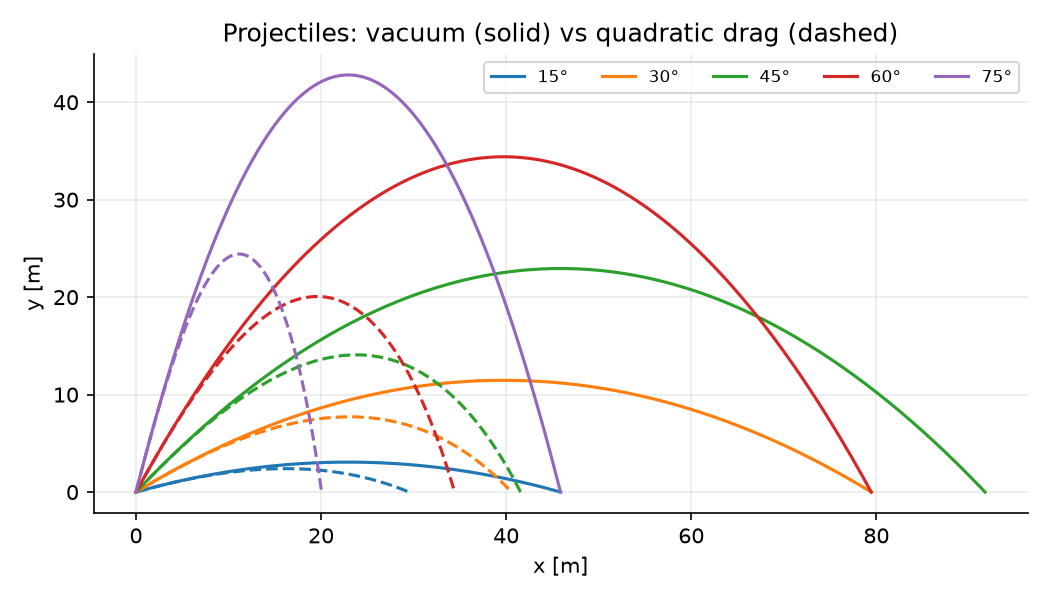
- 02Projectile motion
For: A-level Physics (for example AQA 3.4.1.4, OCR A 3.1.3, Edexcel Topic 2) and IB Physics (A.1). Check your own specification for the exact wording.
A starting pointRun it in Colab
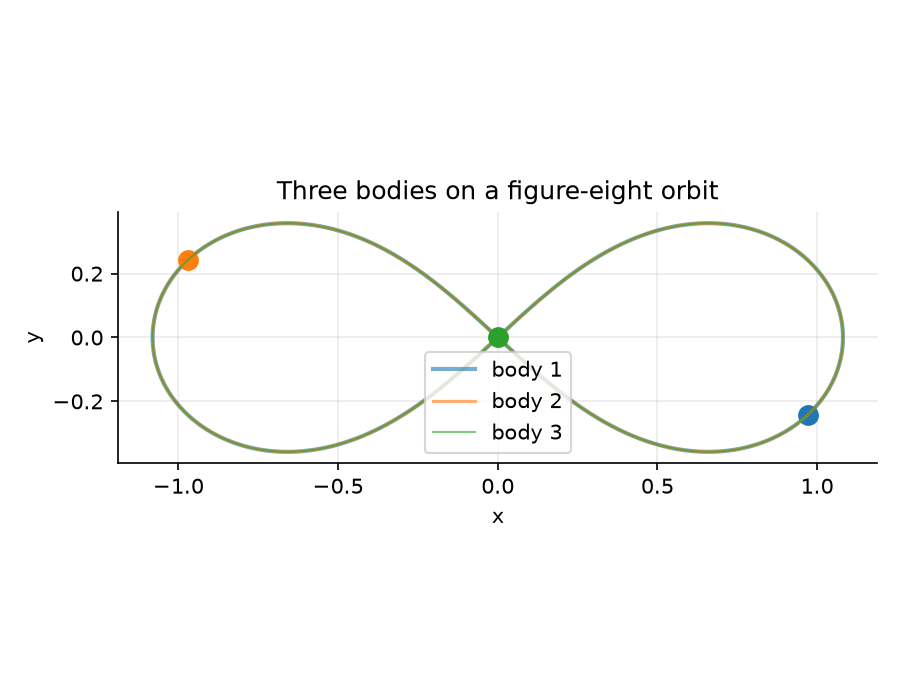
- 03Circular motion and gravitational orbits
For: A-level Physics (for example AQA 3.6.1.1 and 3.7.2, OCR A 5.2 and 5.4, Edexcel Topics 6 and 12) and IB Physics (A.2 circular motion and D.1 gravitational fields). Check your own specification for the exact wording.
Builds on lesson 2Run it in Colab
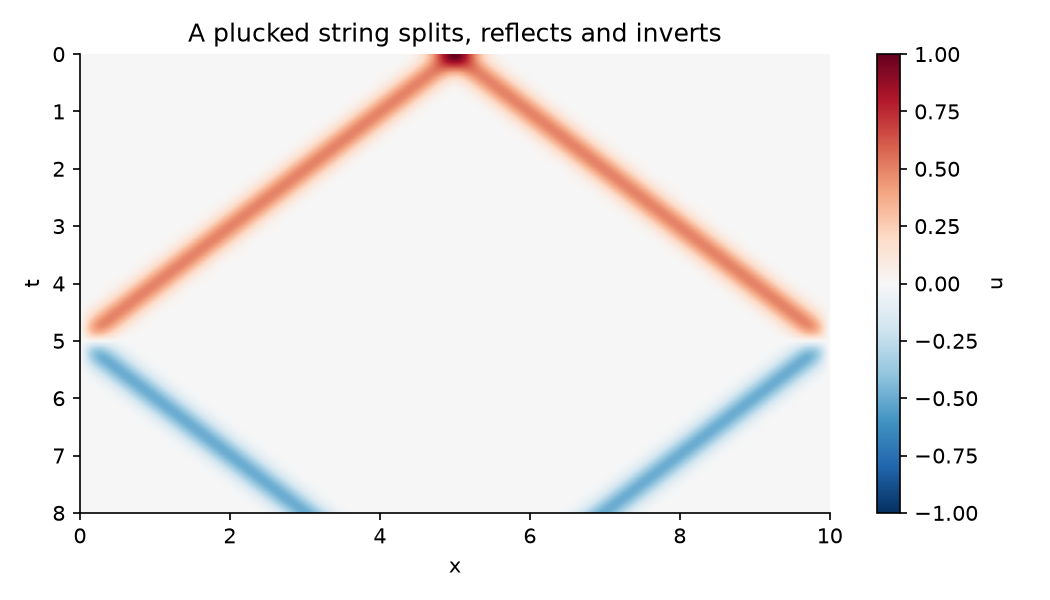
- 04Stationary waves and harmonics
For: A-level Physics (for example AQA 3.3.1.3, OCR A 4.4.4, Edexcel Topic 5) and IB Physics (C.4 standing waves and resonance). Check your own specification for the exact wording.
Builds on lesson 1Run it in Colab
- 05Electric fields and potential
For: A-level Physics (for example AQA 3.7.1 and 3.7.3, OCR A 6.2, Edexcel Topic 7) and IB Physics (D.2 electric and magnetic fields). Check your own specification for the exact wording.
Builds on lesson 3Run it in Colab
- 06Charged particles in electric and magnetic fields
For: A-level Physics (for example AQA 3.7.3.2 and 3.7.5.2, OCR A 6.2 and 6.3, Edexcel Topic 7) and IB Physics (D.3 motion in electromagnetic fields). Check your own specification for the exact wording.
Builds on lessons 2, 3, 5Run it in Colab
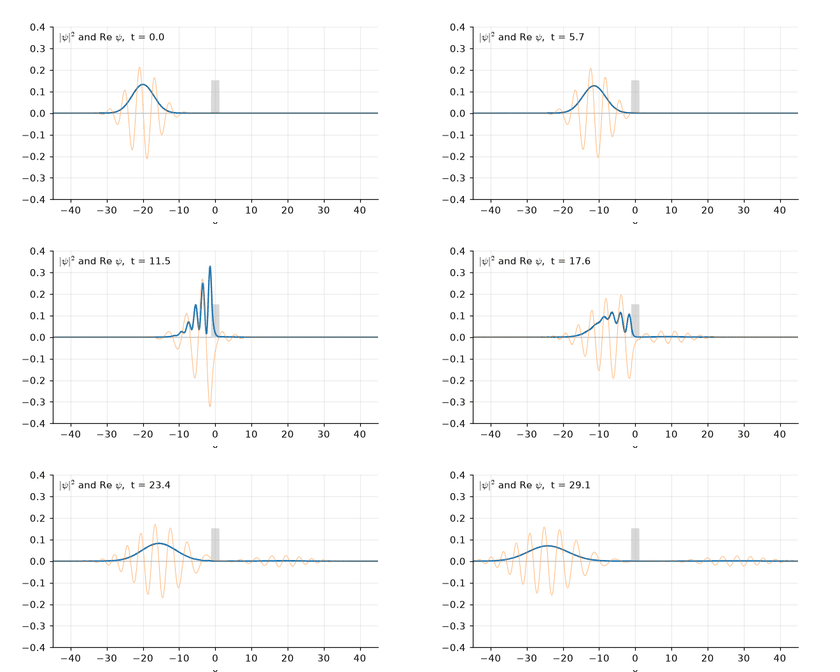
- 07Wave–particle duality and the double slit
For: A-level Physics (for example AQA 3.2.2 and 3.3.2.1, OCR A 4.4.3 and 4.5, Edexcel Topic 5) and IB Physics (C.3 wave phenomena and E.2 quantum physics). Check your own specification for the exact wording.
Builds on lessons 4, 5Run it in Colab
- 08Special relativity
For: IB Physics (A.5 Galilean and special relativity, HL) and the AQA A-level option 3.12.3 (Turning points: special relativity). Check your own specification for the exact wording.
Builds on lessons 2, 5Run it in Colab
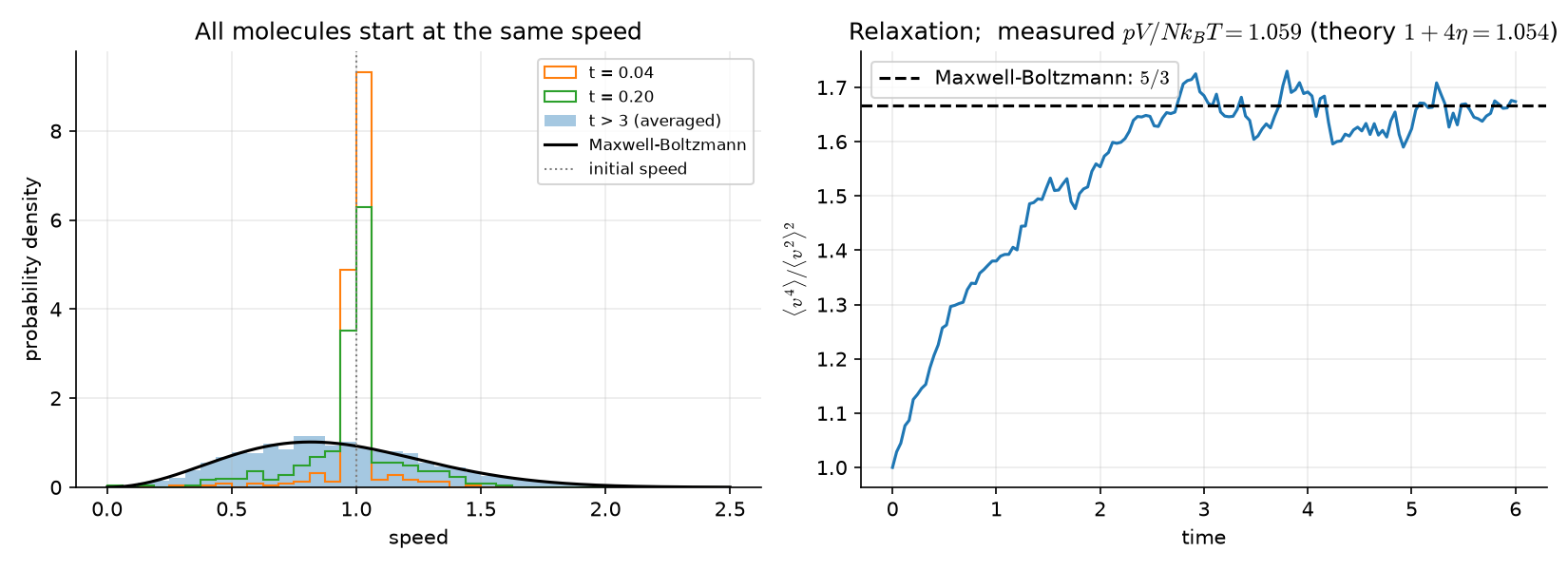
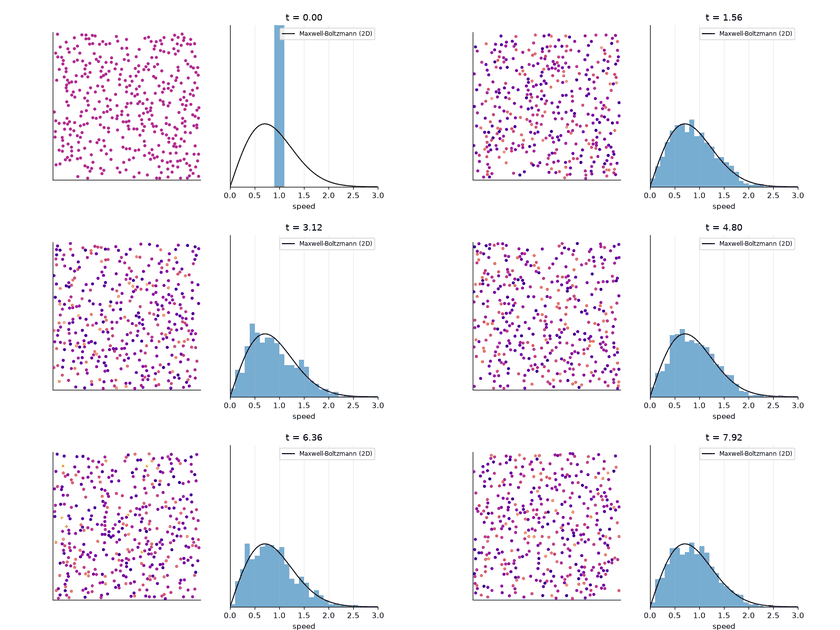
- 09Ideal gases and kinetic theory
For: A-level Physics (for example AQA 3.6.2.2 to 3.6.2.4, OCR A 5.1.4, Edexcel Topic 9) and IB Physics (B.3 gas laws). Check your own specification for the exact wording.
Builds on lesson 3Run it in Colab
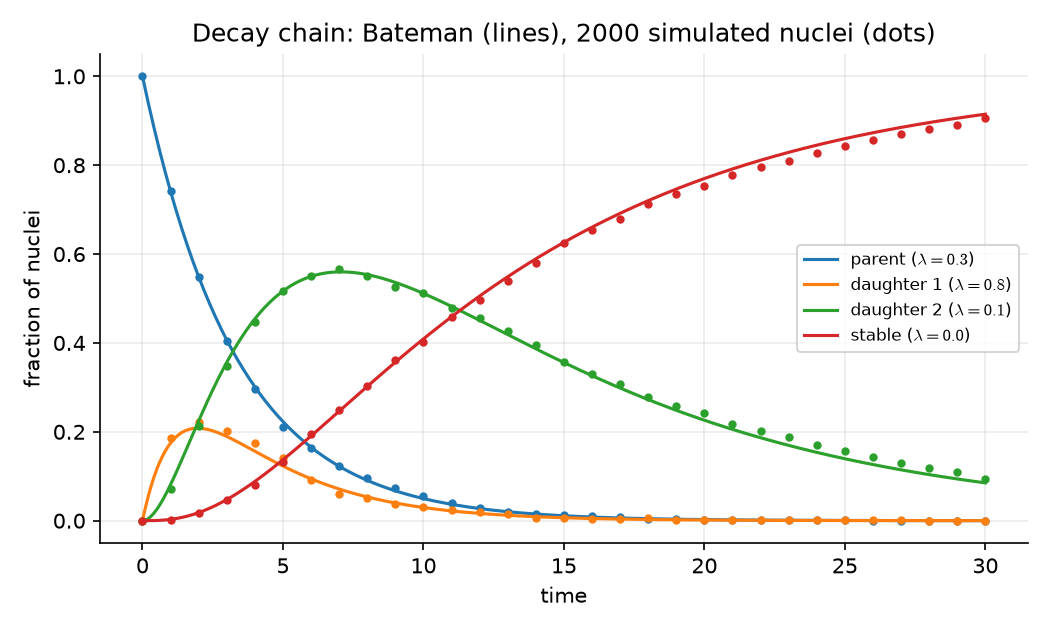
- 10Radioactive decay
For: A-level Physics (for example AQA 3.8.1.3, OCR A 6.4.4, Edexcel Topic 11) and IB Physics (E.3 radioactive decay). Check your own specification for the exact wording.
Builds on lesson 1Run it in Colab
- 11Capacitors
For: A-level Physics (for example AQA 3.7.4, OCR A 6.1, Edexcel Topic 7) and IB Physics (HL capacitance and RC circuits). Check your own specification for the exact wording.
Builds on lessons 5, 10Run it in Colab